
If you are searching for signs you grind your teeth, you may have noticed jaw tension, morning headaches, sensitive teeth or small chips that seem to appear without a clear accident. Teeth grinding is common, but it is not something to ignore if symptoms keep happening.
This guide explains the signs of teeth grinding, why bruxism can damage teeth, and what patients in Kingston upon Thames can do next. It is general information, not a diagnosis, so persistent pain, tooth damage or jaw problems should be checked by a dentist.
Many people grind or clench without noticing it at the time, especially during sleep. The NHS lists teeth grinding symptoms such as face, neck and shoulder pain, jaw pain, headaches, earache, worn-down teeth, broken teeth or fillings, and disturbed sleep.
Look out for these warning signs:
Mayo Clinic also notes that bruxism can be linked with worn enamel, tooth pain, jaw soreness, tired jaw muscles and sleep disruption. The important point is pattern: one headache does not prove bruxism, but repeated morning jaw pain plus worn tooth edges is worth investigating.
Occasional clenching during a stressful day may not cause lasting harm. Regular grinding, particularly at night, can place heavy force through the teeth and jaw joints. Over time, that force may wear enamel, chip edges, crack fillings, strain jaw muscles and make teeth more sensitive.
Bruxism can also complicate other dental care. If you grind heavily, cosmetic bonding, veneers, crowns, fillings and orthodontic retainers may need extra protection or different planning. That does not mean treatment is impossible, but your dentist needs to understand the biting forces before recommending the safest option.
If you already have a chipped or cracked tooth, read about broken tooth treatment. If pain is your main symptom, see our tooth pain advice and arrange an assessment.
There is rarely one single cause. Teeth grinding can be linked with stress, anxiety, sleep problems, lifestyle factors and some medicines. The NHS also highlights alcohol, smoking, recreational drugs and drinking lots of caffeine as factors that can make grinding more likely for some people.
Some people clench during concentration, driving, exercise or computer work. Others mainly grind during sleep and only find out because someone hears it or a dentist spots the signs. Bite issues, missing teeth, worn restorations and jaw joint problems can also influence symptoms, which is why an in-person dental examination matters.
If your grinding seems connected to stress, it can help to treat that as a real health factor, not a personal failing. Relaxation strategies, better sleep routines and reducing evening stimulants may help some people, but they should sit alongside dental advice when teeth are already wearing or painful.
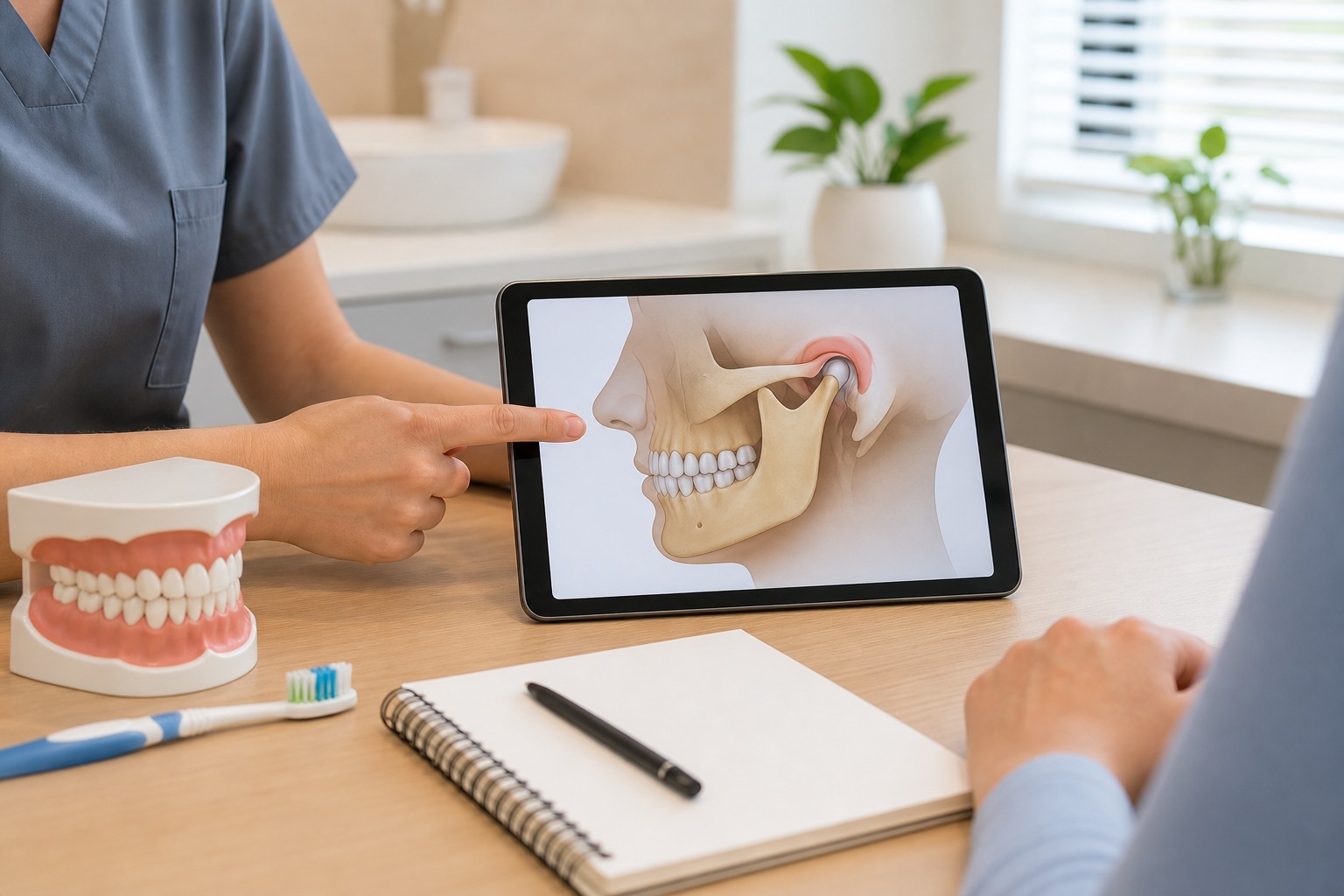
The first step is to collect clues. Notice when the symptoms happen, whether they are worse after stressful days, whether a partner hears grinding, and whether any teeth feel sharp, chipped or sensitive. Take a photo if you notice a new chip or worn edge.
Then book a dental check. During a dental check-up in Kingston, your dentist can look for tooth wear, cracks, gum tenderness, muscle tenderness, bite changes and restoration damage. They can also check whether symptoms might be coming from decay, gum disease, a cracked tooth or another dental problem rather than grinding alone.
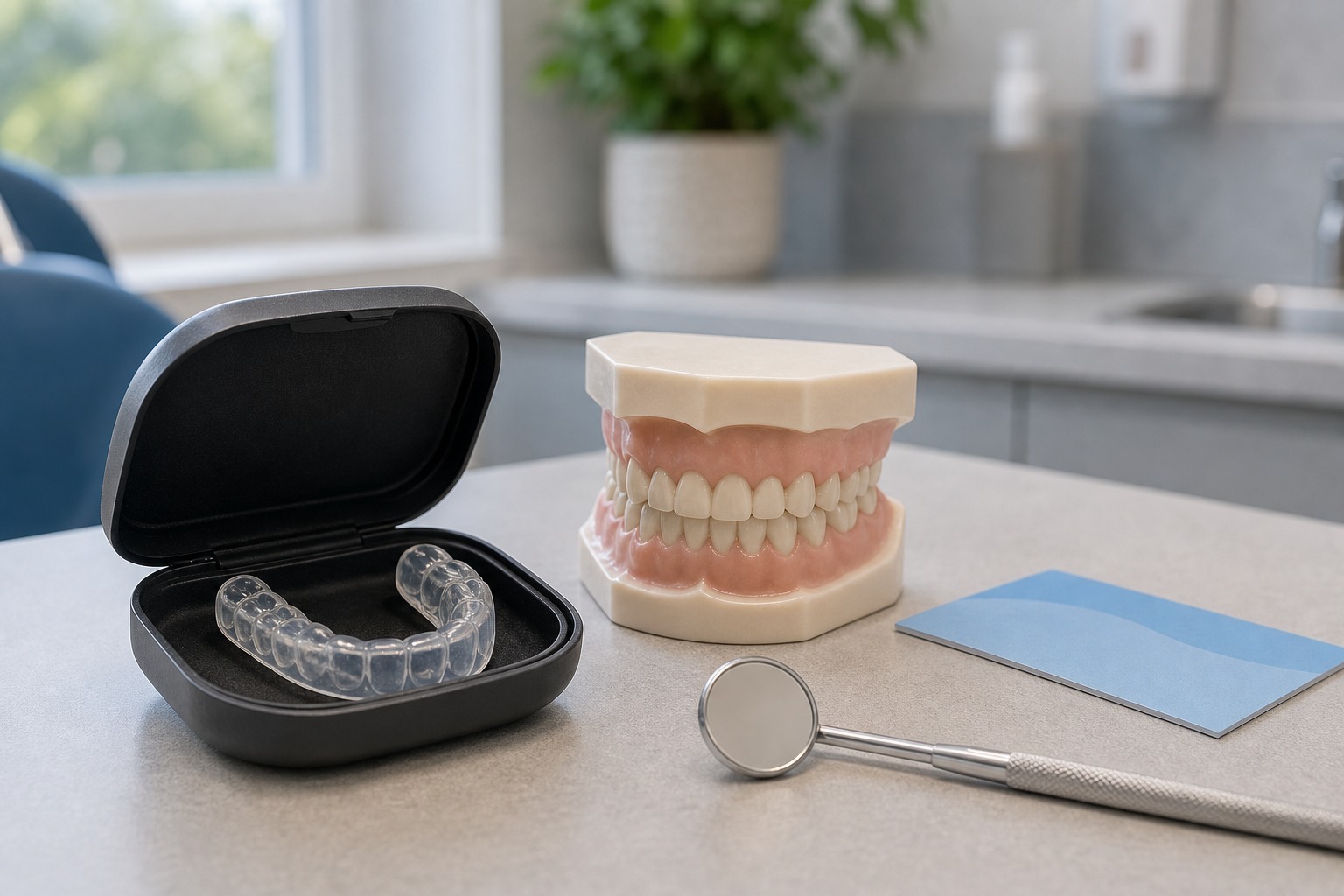
A dentist may recommend a custom mouth guard or mouth splint to protect the teeth from grinding forces at night. This does not necessarily stop the brain from trying to grind, but it can reduce wear and protect teeth and restorations while other contributing factors are addressed.
Do not assume every over-the-counter guard is suitable. A poorly fitting appliance may feel bulky, disturb sleep, irritate the gums or change how the teeth meet. If you have crowns, implants, loose teeth, gum disease, jaw joint symptoms or significant tooth wear, it is especially important to get professional advice.
If your dentist recommends an appliance, ask how to wear it, how to clean it, how often it should be reviewed, and what signs mean it needs adjusting or replacing.
Self-care cannot repair worn enamel or diagnose the cause, but it may reduce strain and help you spot triggers. Sensible steps include:
These steps are most useful when symptoms are mild. If you have tooth damage, pain, sensitivity or jaw problems, self-care should not replace dental advice.
Book a dental appointment if you have repeated jaw pain, morning headaches, tooth sensitivity, worn edges, chipped teeth, broken fillings or a partner reports night grinding. You should seek more urgent dental advice if you have severe toothache, facial swelling, fever, trauma, a loose adult tooth, uncontrolled bleeding, a broken tooth with pain, or a jaw that locks and will not open or close normally.
Grinding can hide other problems. For example, a cracked tooth may hurt when biting and then settle, while decay can cause sensitivity that feels similar to grinding-related sensitivity. A dentist can help separate these causes and plan the right next step.
Thames Street Dental can assess signs of teeth grinding, tooth wear, jaw discomfort, chipped teeth and sensitivity for patients in Kingston upon Thames. If you have already read our related article on teeth grinding at night, this newer guide gives a practical symptom checklist and next steps.
If you are worried about grinding or clenching, contact Thames Street Dental to arrange an assessment. Bring your current night guard or retainer if you use one, and mention any headaches, jaw clicking, tooth sensitivity or sleep disruption.
Common signs include morning jaw ache, headaches, worn or chipped tooth edges, sensitive teeth, disturbed sleep and a partner hearing grinding noises. A dentist can check for wear patterns and other causes of pain.
Yes. Repeated grinding can wear enamel, chip teeth, crack fillings, increase sensitivity and strain the jaw muscles. The risk depends on how often and how forcefully you grind.
A night guard or splint may protect teeth from grinding forces, but it may not stop the grinding habit itself. Your dentist can advise whether a custom appliance is suitable and review contributing factors.
Yes, especially if jaw pain keeps returning, is worse in the morning, is linked with tooth sensitivity or comes with clicking, locking or difficulty opening. Jaw pain can have several causes, so assessment is important.
Stress and anxiety can be linked with grinding or clenching for some people. Managing stress may help, but dental advice is still important if there is tooth wear, pain or sensitivity.
Children can grind their teeth too. If you notice repeated grinding, tooth wear, pain, sleep problems or concerns about the bite, arrange a dental check so the cause and any treatment need can be assessed.
Worried about jaw pain, worn teeth or night-time grinding? Contact Thames Street Dental for teeth grinding advice in Kingston upon Thames.







 020 8546 6546
