
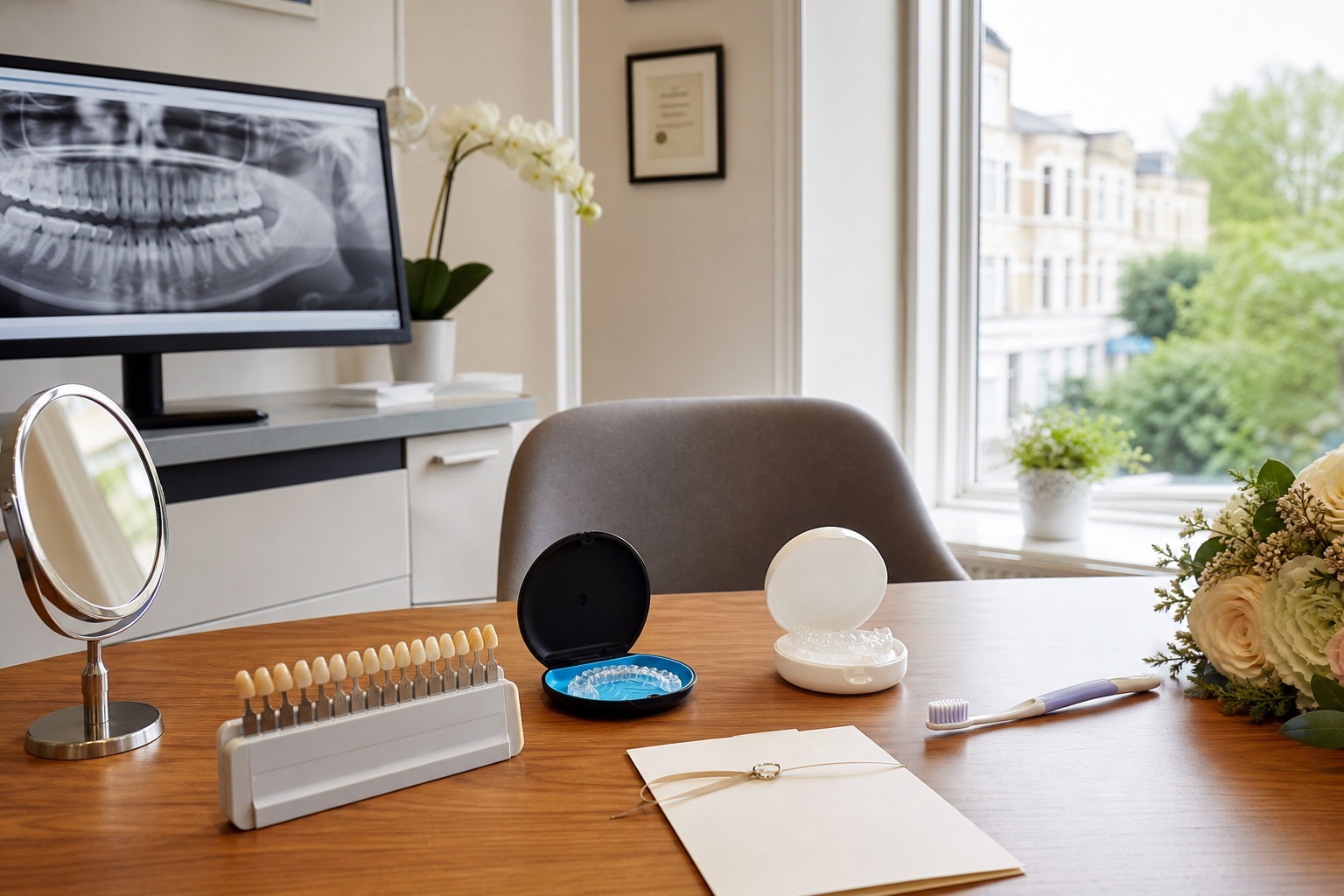
If you are considering dental treatments for your wedding day, the safest approach is to plan early, check your oral health first, and leave enough time for any sensitivity, adjustments or finishing touches. A wedding smile plan may include hygiene care, whitening, composite bonding, aligners or restorative treatment, depending on your teeth and timescale.
This guide explains realistic treatment timings for patients in Kingston upon Thames. It is general information, not a diagnosis or a promise of suitability, so your dentist should assess your mouth before you commit to any treatment.
Before whitening, bonding or aligners, book a dental check-up in Kingston. The NHS explains that a check-up helps your dentist spot dental problems and keep your mouth healthy, with recall timing based on your individual oral health and future risk.
That matters before a wedding because small problems can become stressful if they appear close to the date. Decay, gum inflammation, cracked fillings, wisdom tooth pain, tooth sensitivity and worn edges may all affect which cosmetic options are sensible and how quickly they can be completed.
If you are not sure what you need, begin with the broader dental treatments in Kingston overview, then ask your dentist to prioritise health, comfort and timing.
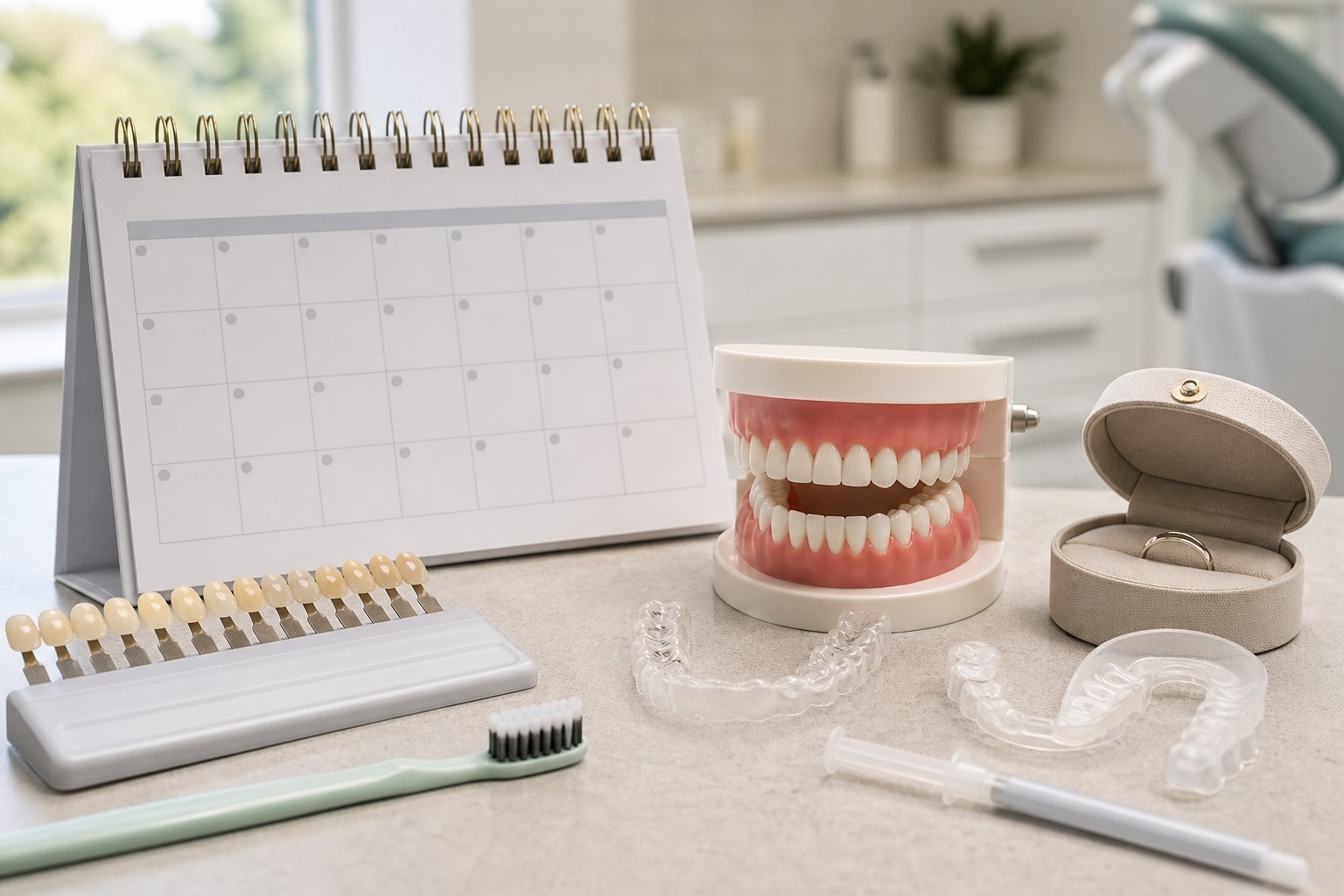
The right timing depends on your oral health, the treatment chosen and how close the wedding is. As a practical guide, start aligner conversations many months ahead, whitening discussions several weeks ahead, and hygiene care early enough that gums can settle before photographs and celebrations.
If you only have a short window, your dentist may advise simpler, lower-risk steps such as a check-up, hygiene visit, sensitivity review, stain removal or replacement of a rough temporary filling. Bigger appearance changes are usually easier to plan when there is time for consent, previews, adjustments and aftercare.
A dental hygienist in Kingston can help remove plaque, tartar and external staining, as well as review brushing and interdental cleaning. This can be useful before whitening because plaque and gum inflammation may affect comfort and cosmetic planning.
The NHS says using a kit from a dentist, or having whitening at a dental surgery, is the safest way to whiten teeth. It also advises that your dentist should check your teeth and gums are healthy before treatment. The General Dental Council explains that tooth whitening is dentistry and should be carried out by registered dental professionals, or by appropriate dental professionals on a dentist’s instruction.
For wedding planning, avoid salon or online whitening shortcuts. Whitening can cause temporary sensitivity or sore gums, and crowns, dentures, implants and veneers do not whiten like natural teeth. If you are interested, read more about teeth whitening in Kingston and ask early so shade changes can be planned before other cosmetic work.
Composite bonding in Kingston may be considered for small chips, uneven edges, minor gaps or shape improvements where suitable. It still needs assessment, shade planning and enough time to make refinements if your bite, tooth wear or whitening plan affects the final result.
The NHS explains that orthodontic treatment can improve the alignment and appearance of teeth and that adult orthodontic treatment can begin at any age, but treatment length depends on complexity. For many adults, aligners are a months-long plan rather than a quick pre-wedding touch-up.
If the wedding is approaching, your dentist can still discuss whether Invisalign treatment is realistic for your goals, or whether it should be part of a longer-term plan after the wedding. Good cleaning during aligner treatment matters because plaque around attachments can increase the risk of marks and gum problems.
Do not panic-book every cosmetic option at once. A short timeline calls for calm prioritisation: treat pain or infection first, stabilise broken or rough teeth, check gum health, and choose only treatments that can be completed comfortably before the event.
In the final week, be cautious with anything that could leave sensitivity, gum soreness, bite changes or temporary restorations feeling unfamiliar. If you are having whitening, ask when to stop, how to manage sensitivity, and whether your existing restorations will still match.
Cost may also shape the plan. For a broad overview, see the treatment fee guide and ask about relevant payment options where appropriate and subject to the practice’s terms.
Thames Street Dental can help patients in Kingston upon Thames plan sensible dental treatment before a wedding, from check-ups and hygiene care to whitening, bonding and clear aligner discussions where suitable. The most useful first appointment is often a planning consultation that separates urgent health needs from optional cosmetic goals.
Bring your wedding date, any photography deadlines, previous dental concerns, current retainers or aligners, and a clear idea of what you would like to improve. If you are ready to start, contact Thames Street Dental and tell the team your wedding date so your timescale can be considered from the beginning.
Start as early as you can. Aligners and complex cosmetic plans often need months, while whitening, hygiene care and bonding still need enough time for assessment, shade planning, sensitivity management and adjustments.
It is usually better to plan whitening weeks ahead rather than in the final days. Whitening can cause temporary sensitivity or gum soreness, and your dentist needs to check your teeth and gums before treatment.
Composite bonding may be suitable for small chips, uneven edges or minor shape concerns, but it depends on your teeth, bite, oral health and timescale. Assessment is needed before treatment is recommended.
Invisalign or other clear aligners may help with alignment goals, but treatment time depends on complexity. If your wedding is soon, your dentist can advise whether aligners fit your timescale or should wait until after the event.
Avoid starting treatment that could leave new sensitivity, gum soreness, unfamiliar bite changes or unfinished temporary work unless your dentist advises it is necessary. The final week is usually better for checking comfort and maintaining the plan.
Yes. Tooth pain, swelling, a broken tooth, bleeding, trauma or signs of infection should be checked promptly. Cosmetic treatment should not take priority over urgent dental health needs.
Planning a wedding smile in Kingston? Contact Thames Street Dental to discuss a safe, personalised dental treatment timeline.







 020 8546 6546
