
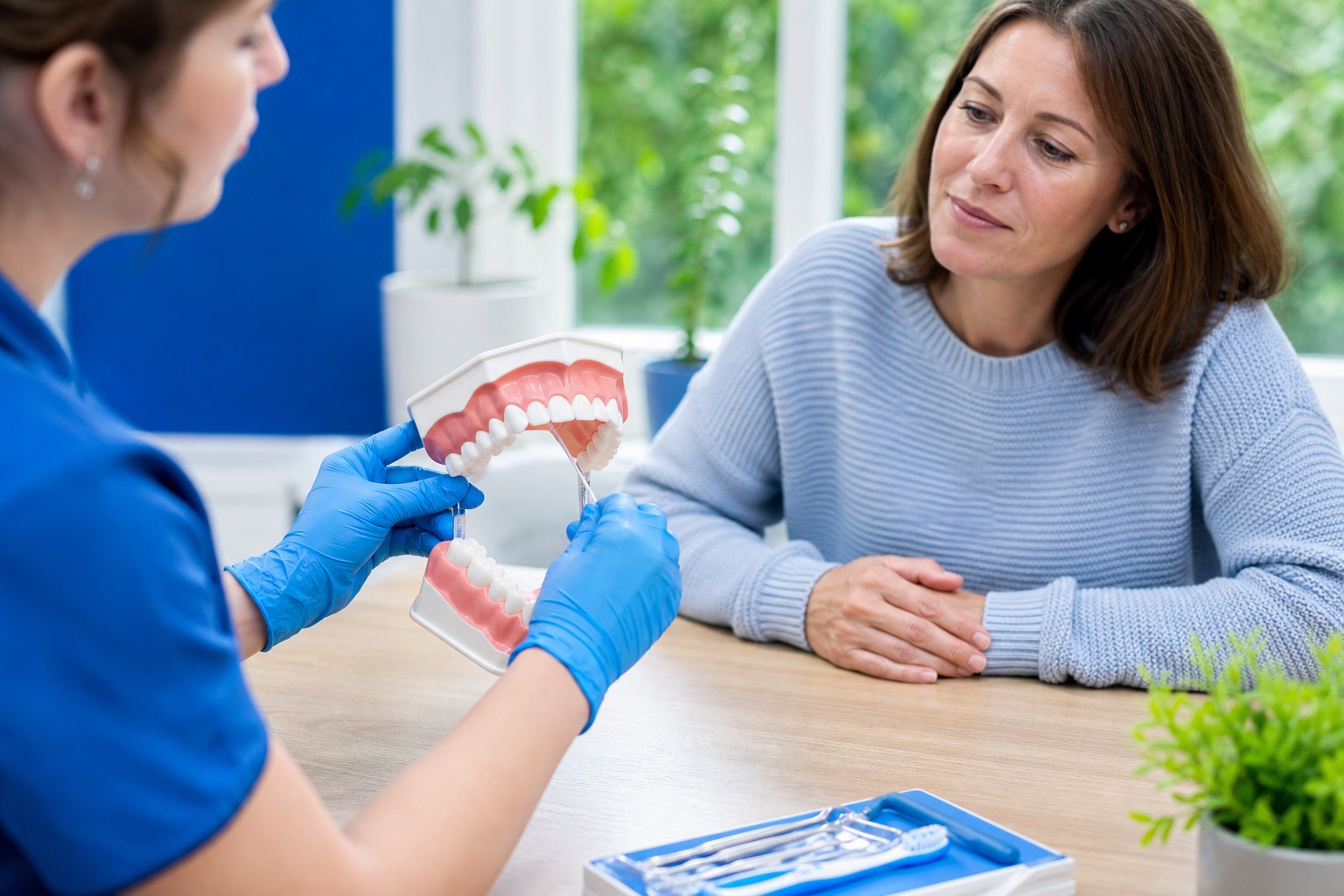
Dental bridge aftercare protects more than the visible replacement tooth. A conventional bridge relies on one or more supporting teeth, while an adhesive bridge is bonded to a neighbouring tooth. Food and plaque can collect at margins and beneath the false tooth, where an ordinary strand of floss may not pass down from the biting surface.
A useful routine combines twice-daily brushing, daily cleaning under the bridge and reviews based on your oral health. Your dentist or hygienist should demonstrate tools on your particular restoration because a technique suitable for one design may be awkward or damaging for another.
The replacement part of a bridge does not decay, but it sits close to gum tissue and is connected to retainers or wings. Plaque left around these areas can contribute to gum inflammation, unpleasant taste or odour, and decay in a supporting tooth.
Decay around a bridge margin can be difficult to notice yourself. The restoration may still look complete from the front while a supporting tooth is changing underneath. Likewise, swollen gums may make cleaning uncomfortable, which can lead to avoiding the area and worsening plaque retention.
The objective is not to force every gap open. It is to disrupt plaque without cutting the gum or levering against the bridge. Ask for a demonstration and bring your cleaning aids to a review if you are unsure whether they are reaching the right surface.
Cleaning may cause slight bleeding where gums are inflamed, but persistent or increasing bleeding needs assessment. Do not respond by snapping floss harder into the tissue.
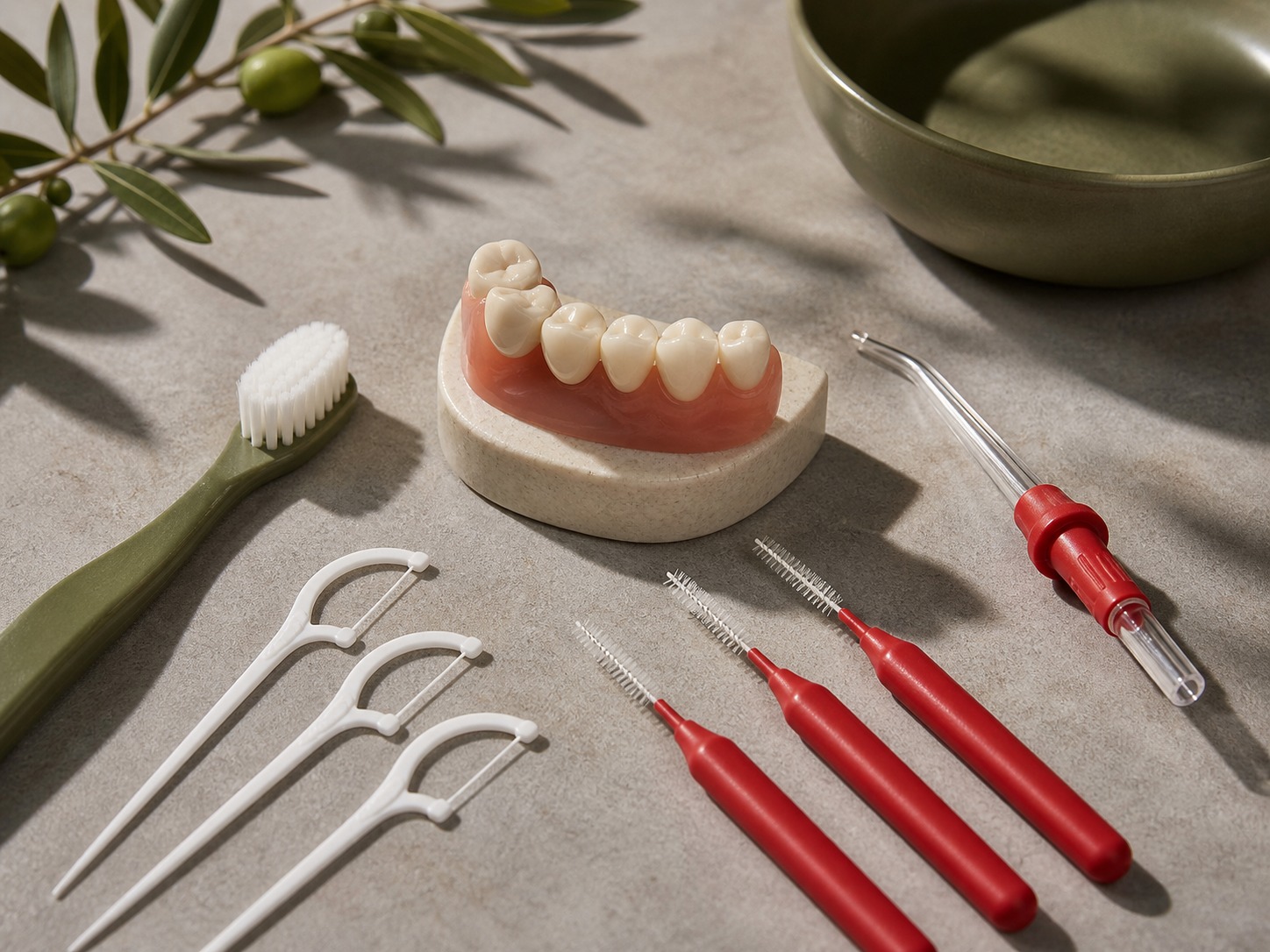
A floss threader helps guide floss through the side of a bridge where it cannot be dropped between teeth from above. Some bridge floss has a firm end for threading and a thicker section for the underside. Move it along the restoration and tooth surfaces gently rather than sawing into the gum.
An interdental brush can be useful when there is enough space and the size is correct. If the wire catches, bends sharply or requires pressure, stop and ask for a demonstration. A water flosser may help some patients disrupt debris, but it does not automatically replace mechanical plaque removal around every margin.
Small single-tufted brushes can reach awkward outer or inner edges. The best tool is one you can use accurately and consistently. Mobility, vision, gag reflex and bridge position should shape the recommendation.
Follow the fitting dentist’s instructions while the cement or bonding material settles. If you are numb, avoid biting the cheek or tongue and wait before eating foods that require confident chewing. Initial awareness can be normal, but the bridge should not create a persistent high point or painful bite.
Once comfortable, a bridge is intended to function during eating. Sensible caution with very hard objects and sticky sweets reduces avoidable stress, particularly for an adhesive bridge. Do not use teeth to open packaging, crack shells or hold pins.
Food repeatedly wedging beside or under a bridge can reflect shape, contacts, gum change or cleaning technique. It is not always solved by avoiding that food. Ask the dentist to assess the cause, especially if the trap is new.
Arrange prompt advice for a bridge that moves, lifts, cracks or changes your bite. Pain, facial swelling, a bad taste with swelling, trauma or difficulty swallowing needs urgent assessment. If a bridge comes out, keep it safely and do not use household glue or force it back into place.
Sensitivity may occur briefly after some bridge work, but worsening or lingering pain should be checked. Pain on biting can come from the supporting tooth, bite, gum or another nearby tooth. A radiograph may be considered if it can add relevant information, but the dentist also needs to examine the restoration directly.
Watch for persistent bleeding, gum swelling, recession, an unpleasant taste or odour that returns soon after cleaning, and floss that begins to fray at one margin. A dark line can reflect material or gum position, but it can also accompany margin or tooth changes.
Movement is never a maintenance task to manage at home. Continued chewing on a loose bridge can damage the retainer, supporting tooth or restoration and creates a risk that it may detach unexpectedly.
There is no guaranteed replacement date for a dental bridge. Material, design, supporting-tooth health, bite forces, cleaning, smoking, dry mouth and grinding all influence performance. A bridge that is many years old may remain serviceable; a newer one can still need attention if a supporting tooth changes.
At review appointments, the dentist checks margins, retention, bite, gums and supporting teeth. X-rays are taken only where justified. Hygiene appointments can focus on access beneath the bridge and refine your technique rather than simply polishing the visible surface.
If you clench or grind, discuss it rather than buying an appliance that may not fit over the bridge. A professionally planned night guard may be appropriate in some cases, but it cannot prevent every complication.
The first step is to identify why the bridge has changed. A debonded adhesive bridge might sometimes be rebonded if the restoration and tooth are suitable. Decay, fracture, loss of supporting tooth structure or a design problem can make a new restoration necessary.
Removing a conventional bridge may require cutting it, and the supporting teeth then need reassessment. Options are not limited to another bridge: depending on the gap, health and priorities, the discussion may include no immediate replacement, a removable denture or an implant assessment.
Read about dental bridges in Kingston for the treatment pathway. This aftercare guide supports an existing bridge and should not be read as evidence that a bridge is the right way to replace a particular tooth.
Yes, but you usually need a threader, bridge floss or another recommended aid because ordinary floss cannot pass down through the joined replacement tooth.
Inflamed gums may bleed, but persistent bleeding needs improved plaque control and professional assessment rather than stopping cleaning.
Usually, yes. Accurate brushing at the gum margins matters more than whether the brush is manual or powered.
Avoid chewing on it, keep any detached part safe and contact a dentist promptly. Do not use glue.
At the examination interval recommended for your oral health, and sooner if movement, pain, bleeding, food trapping or another change develops.
Thames Street Dental can assess the bridge, supporting teeth and gums and demonstrate cleaning methods suited to its design.







 020 8546 6546
