
If you have lost a retainer, contact the practice responsible for your retention as soon as you can. Teeth can begin to move when a removable retainer is not worn, although the speed and amount vary. Prompt advice gives the clinician more options than waiting until the change is obvious.
Do not panic and do not improvise with a sports mouthguard or online mouldable appliance. The next step depends on how long the retainer has been missing, the original orthodontic treatment, your current tooth position and whether valid records are available.
Search likely places methodically: the retainer case, bathroom, bedside, bag, car and any restaurant or school location where it was removed. Check wrapping and food containers before waste is discarded. Do not handle refuse in a way that creates a sharps or hygiene risk.
Then contact the dental or orthodontic team, even if you expect it to turn up. Explain which arch is affected, when it was last worn, whether treatment finished recently and whether you have noticed movement. A clear photograph may help triage but cannot establish whether teeth have shifted accurately enough for a replacement.
If you have a spare supplied for this purpose, ask whether to use it. It should seat completely without being bitten or forced into position. Stop if there is marked pain, a visible gap between retainer and teeth, or the appliance distorts.
A retainer is designed to hold a planned position. Using it as unsupervised active treatment can injure teeth or gums and may move teeth unpredictably.
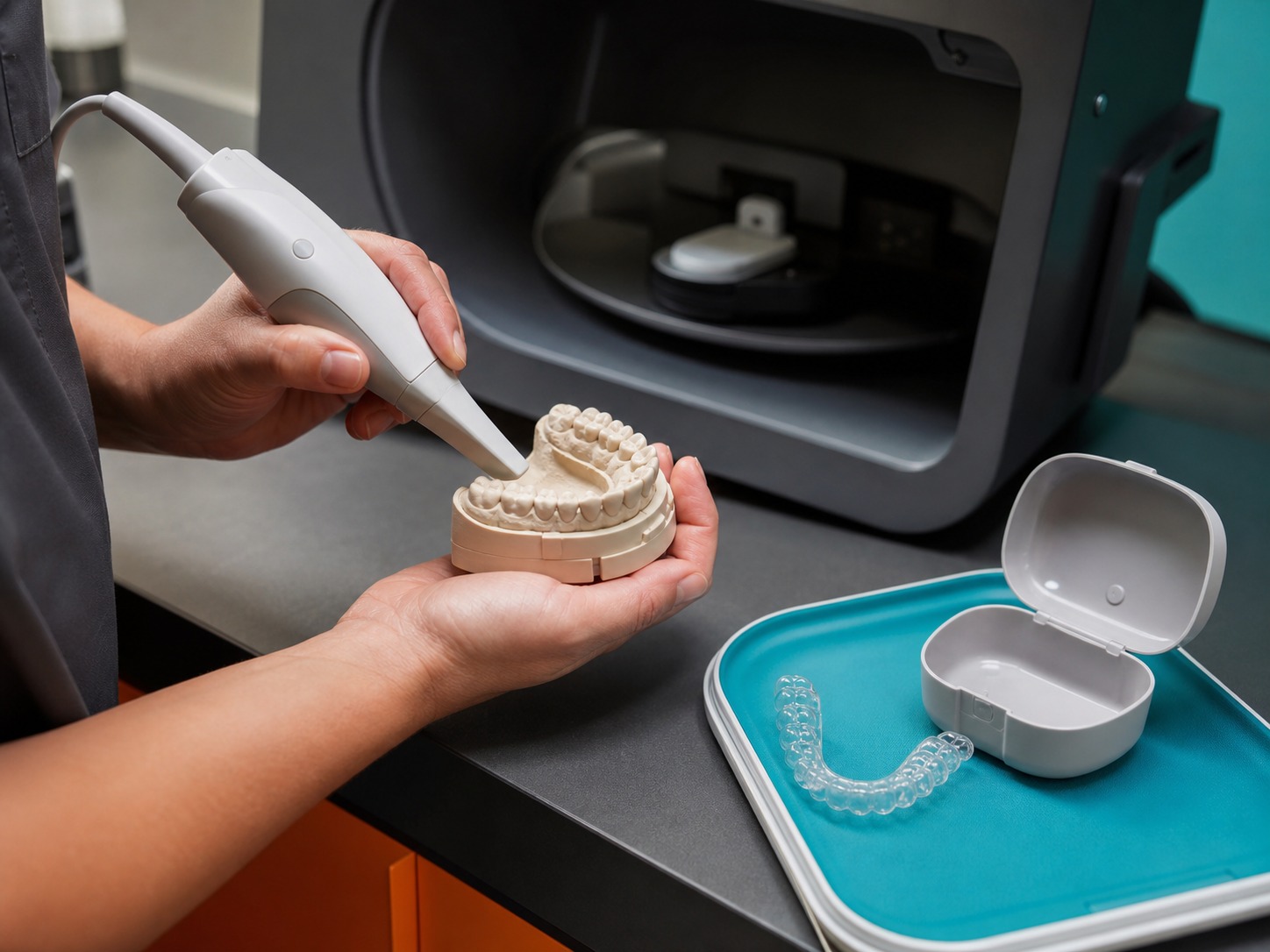
The clinician first checks the teeth, gums, bite and any remaining attachments or fixed retention. If the teeth are acceptably positioned, a new scan or impression can record their current shape. Some practices may hold a usable digital model from recent treatment, but records, materials and tooth position determine whether it remains appropriate.
Clear vacuum-formed, Hawley-type and other retainers have different designs and indications. Replacement is not always identical to the lost appliance. The dentist or orthodontist considers durability, bite, cleaning, previous breakage and the original retention plan.
Once fitted, the retainer should be checked for complete seating, secure retention, comfortable edges and interference with the bite. You should receive wear, cleaning and storage instructions specific to it.
Small changes may be subtle: a contact feels tighter, a tooth edge looks different or the old retainer no longer seats. The clinician must decide whether a retainer can safely hold the current position or whether movement should be discussed.
Do not assume that a new retainer will reverse relapse. A passive replacement normally records and maintains the position present when it is made. If correction is appropriate, options may include a limited aligner or another orthodontic plan after assessment.
Movement also needs context. Gum health, wisdom teeth, habits and normal lifetime change can influence tooth position. Retention is generally a long-term commitment because teeth and supporting tissues continue to adapt after active treatment.
Seek prompt advice if a broken retainer has a sharp edge, has been swallowed or may have been inhaled, or if there is trauma, significant pain or swelling. Call 999 for breathing difficulty. Keep broken parts in a container and do not wear an appliance that is cracked, distorted or cutting the mouth.
A fixed retainer is a wire bonded behind the front teeth. One pad can detach while the rest remains in place, leaving the wire able to flex or trap plaque. Contact the treating team when you notice movement, a sharp point, a changed tooth position or floss passing differently.
Do not pull the wire or add glue. If it is irritating the tongue, the practice may advise a temporary orthodontic wax until assessment. Continue gentle cleaning where possible without levering the wire.
The dentist or orthodontist will decide whether to rebond, repair, remove or replace it and whether removable retention is also needed. A detached fixed retainer is not necessarily an emergency, but delay can allow movement or damage.
Replacement cost depends on the retainer type, whether one or both arches are involved, the records required and whether further treatment is needed. Ask for a written estimate. It is useful to clarify whether replacement was included in an original orthodontic package or is a separate maintenance cost.
Laboratory timing varies. The team can explain how to manage the interval rather than making an appliance immediately without adequate checks. A recent-treatment patient may be prioritised differently from someone seeking replacement years later.
If treatment was provided elsewhere, request records where possible and bring any old models, spare appliances or photographs. The new clinician still needs to assess the current mouth and is not required to reproduce a design that is no longer suitable.
Use a rigid, ventilated case every time the retainer leaves your mouth. Avoid wrapping it in tissue or placing it on a meal tray. Label the case with contact details where appropriate, and keep it away from heat and pets.
Clean with the method advised for the material. Hot water can distort some clear retainers, while abrasive toothpaste can roughen the surface. Inspect it regularly in good light for cracks, clouding or loss of fit.
Discuss whether a spare is sensible, especially before travel. The retainers service in Kingston explains assessment and replacement; it remains the canonical treatment route rather than this immediate-action guide.
There is no reliable universal timetable. Movement may begin before it is visible, especially soon after treatment, so contact the treating team promptly.
Only if advised and if it seats fully without force. A tight or distorted retainer should be assessed.
A safe replacement needs an accurate record, fit check and clinical decision about current tooth position. A generic appliance does not provide that.
A passive retainer normally holds the recorded position. Correcting relapse may require a separate orthodontic plan.
Retention is usually long term because teeth can continue to move throughout life. Follow the wear schedule given for your treatment.
Thames Street Dental can check current tooth position and explain the appropriate replacement and ongoing retention options.







 020 8546 6546
