
A loose denture may lift when you speak, rock during chewing or trap food beneath it. This does not necessarily mean you have used it incorrectly. The tissues that support dentures change over time, particularly after teeth are removed, and the denture surface does not remodel with them.
Fit problems deserve a dental assessment because movement can reduce chewing confidence and create sore areas. The right solution depends on whether the cause is tissue change, wear, damage, dry mouth, the bite, supporting teeth or the original design. Adding more adhesive is not a diagnosis.
After an extraction, the ridge beneath a denture changes as healing continues. Changes can be greatest early on but do not stop completely. Weight change, ageing, some health conditions and long-term denture wear may also affect the supporting tissues.
Acrylic teeth and biting surfaces wear. As the bite changes, pressure may become uneven and make a denture tip. Clasps on a partial denture can lose adaptation, while the natural teeth supporting them can move, develop decay or receive new restorations.
Damage is another possibility. A small crack, repair line or warped base can alter fit before the problem looks dramatic. Dry mouth may reduce comfort and retention, and reduced muscle control or dexterity can make insertion harder. More than one factor often contributes.
Do not test a loose denture by repeatedly clicking it in and out. That can irritate tissues and place extra force on clasps or teeth.
A suitable fixative may provide temporary reassurance for a denture that has already been assessed as serviceable. Use only the amount and method on the product instructions, on a clean denture, and remove residue each day.
Needing steadily more adhesive, reapplying throughout the day or still experiencing movement indicates that the fit should be checked. Excess material can ooze, alter the bite and make cleaning difficult. Some people also have sensitivities or medical considerations that should be discussed with a dentist or pharmacist.
Adhesive should not be used to hold a fractured denture together, cover a sharp edge or postpone care for sores. Household glues are unsafe in the mouth and can damage the acrylic, making professional repair more difficult.
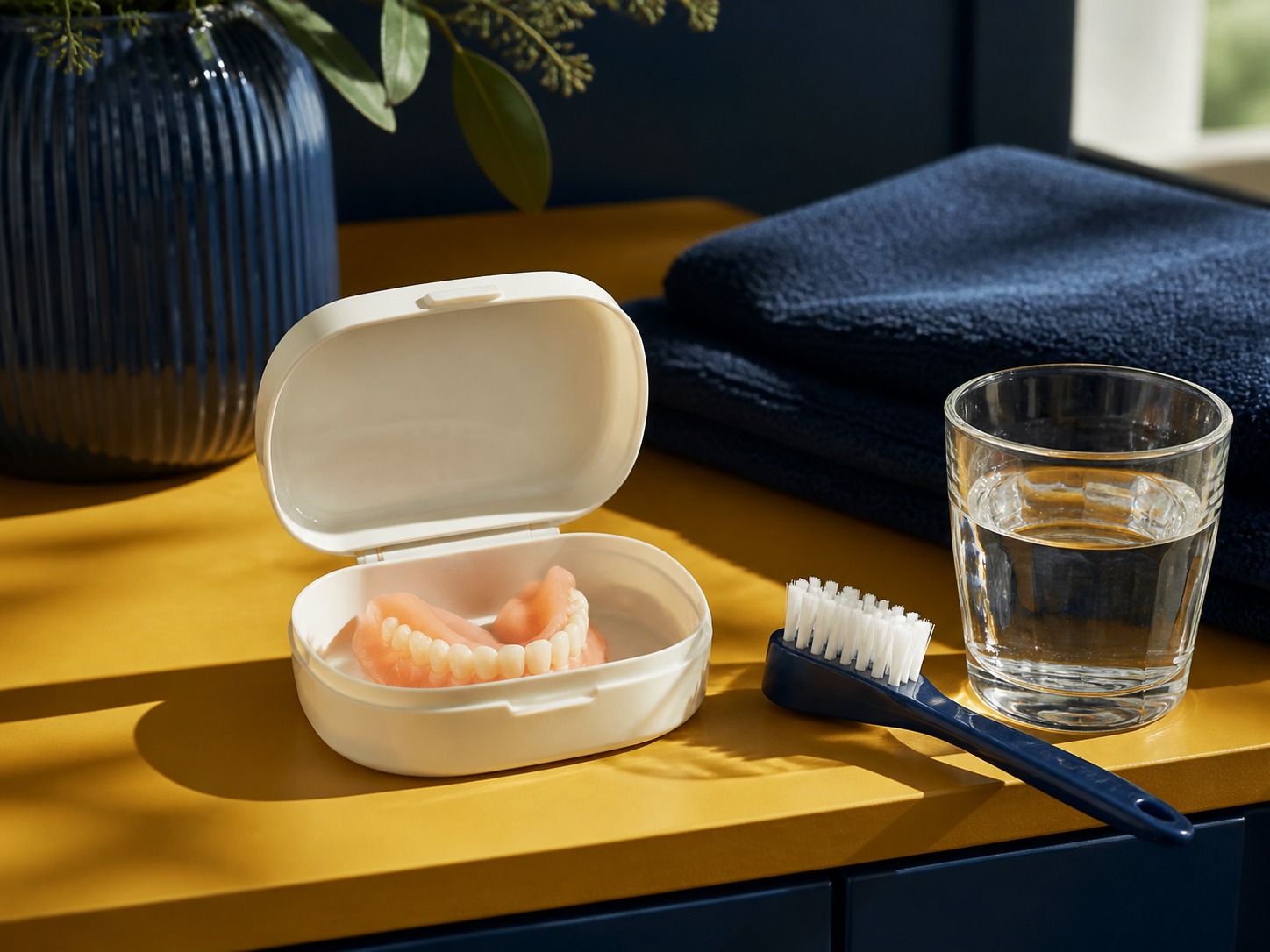
Movement does not remove the need for hygiene. Clean dentures daily with a denture brush or suitable soft brush and a denture-cleaning product recommended for the material. Ordinary toothpaste can be abrasive. Follow soaking-product instructions and never use very hot or boiling water, which can distort the base.
Brush the gums, tongue and any remaining teeth with the appropriate brush and fluoride toothpaste. Partial dentures create extra plaque-retentive areas around clasps and supporting teeth. Remove the denture for cleaning rather than trying to reach every surface while it is in place.
Unless your dentist has given different instructions, removing dentures at night gives tissues a rest. Store them as advised for their material and keep them away from children and pets. A named container reduces the chance of accidental loss in hospital or residential care.
Seek urgent advice if a denture or fragment may be inhaled or swallowed, if swelling affects breathing or swallowing, or after significant facial trauma. Prompt dental assessment is also needed for severe pain, spreading swelling, uncontrolled bleeding, or an ulcer that does not heal within three weeks.
Bring the denture to the appointment even if you cannot wear it. The dentist checks its fit at rest and during movement, pressure areas, borders, bite, wear and structural integrity. For a partial denture, the remaining teeth, clasps and gums are essential parts of the assessment.
The mouth is examined for trauma, infection, dry mouth, decay, gum disease and other tissue changes. Mention medicines and health changes because these can affect saliva, dexterity and tolerance. An X-ray is not automatic; it is considered only if a clinical question justifies one.
Describe what you want to improve. Stability during speaking, ability to eat a wider range of foods and comfort may require different design decisions. Expectations also need to account for the anatomy available to support a removable appliance.
A small pressure point may be adjusted when the overall fit and design remain sound. A reline adds new material to the fitting surface to adapt it to changed tissues. It is not suitable for every worn, damaged or poorly designed denture.
A laboratory repair may restore a fracture or replace a tooth, but the reason for breakage matters. Repairing without correcting an uneven bite or fit can lead to repeat failure. A remake allows new records of the tissues, bite and appearance when the existing denture can no longer be predictably modified.
Some patients may wish to discuss implant-retained options, but surgery, health, bone, cleaning, maintenance and cost all need assessment. No option eliminates ongoing reviews. The canonical dentures service in Kingston explains the treatment route; this article is for recognising and managing looseness safely.
Handle a denture with both hands where possible and clean it over a protected surface. Do not wrap it in tissue, where it can be discarded. Avoid biting directly on very hard objects and have repeated fractures investigated.
Keep examinations even if you have no natural teeth. Denture wearers still need oral tissue checks, fit assessment and advice as health changes. Do not wait until the denture becomes unwearable if movement, rubbing or chewing difficulty is gradually increasing.
New dentures require adaptation and may need planned adjustments. Filing a sore spot yourself removes the dentist’s guide to where pressure is occurring and can permanently compromise the border or fit.
Tissues can change, but movement that affects comfort, speech or eating should be assessed rather than accepted as inevitable.
Sometimes an adjustment, clasp adaptation or reline is suitable. Other dentures need repair or replacement after the cause is assessed.
Most people are advised to remove them at night unless a dentist gives a specific alternative instruction.
The lower ridge often provides less surface area and the tongue influences stability. Fit, bite, anatomy and muscle control all matter.
No. Household adhesive is not safe for this use and may damage the denture. Keep the pieces and arrange professional advice.
Thames Street Dental can assess its fit, your oral tissues and the bite before explaining adjustment, repair or replacement options.







 020 8546 6546
