
A mouth ulcer is a break in the lining of the mouth. It can sting when you eat, drink or brush, but most small ulcers settle without dental treatment. The important dividing line is healing: NHS guidance says a mouth ulcer lasting longer than three weeks should be checked by a dentist or GP.
Do not wait for that deadline if the area is getting worse or another symptom concerns you. An examination can distinguish a common short-lived ulcer from ongoing irritation, infection, a general health problem or a change that needs specialist assessment. This guide explains what to monitor and what a Kingston dentist can assess; it cannot diagnose a particular mark online.
Common ulcers often appear inside the lips or cheeks, along the side of the tongue or on the floor of the mouth. They may have a pale centre and a red border. Some begin after accidentally biting the cheek, eating something sharp, burning the mouth or rubbing against a rough restoration.
Recurrent aphthous ulcers are another familiar pattern. They can return at intervals even when no single cause is found. Stress, tiredness and some nutritional or medical conditions may be associated, but assumptions are not a substitute for a history and examination. Cold sores are different: they usually affect the lips or skin around the mouth and are contagious.
Make a note of when the ulcer started and whether it is shrinking. A clear photograph taken for your own comparison can help you describe change, but image quality, lighting and angle make remote diagnosis unreliable.
These signs have many possible explanations. Being referred for further tests does not mean that cancer has been diagnosed; it means the cause should be established promptly.

Choose softer foods and cooler drinks if eating is uncomfortable. Avoid foods that clearly irritate the area, particularly rough, very spicy, salty or acidic items. Brush gently with a soft toothbrush so plaque does not build up around the sore area.
A pharmacist can advise on suitable pain-relieving products, antimicrobial mouthwash or other over-the-counter options. Check the label and your medical history, and ask before using a product for a child, during pregnancy or alongside prescribed medicines. A warm saline rinse may soothe some people; spit it out rather than swallowing it.
Do not scrape, burn or cut the ulcer. Do not repeatedly apply aspirin to the gum or use an online chemical remedy. If a sharp tooth, filling, brace wire or denture is rubbing, a dentist needs to address the source rather than leaving you to pad or file it indefinitely.
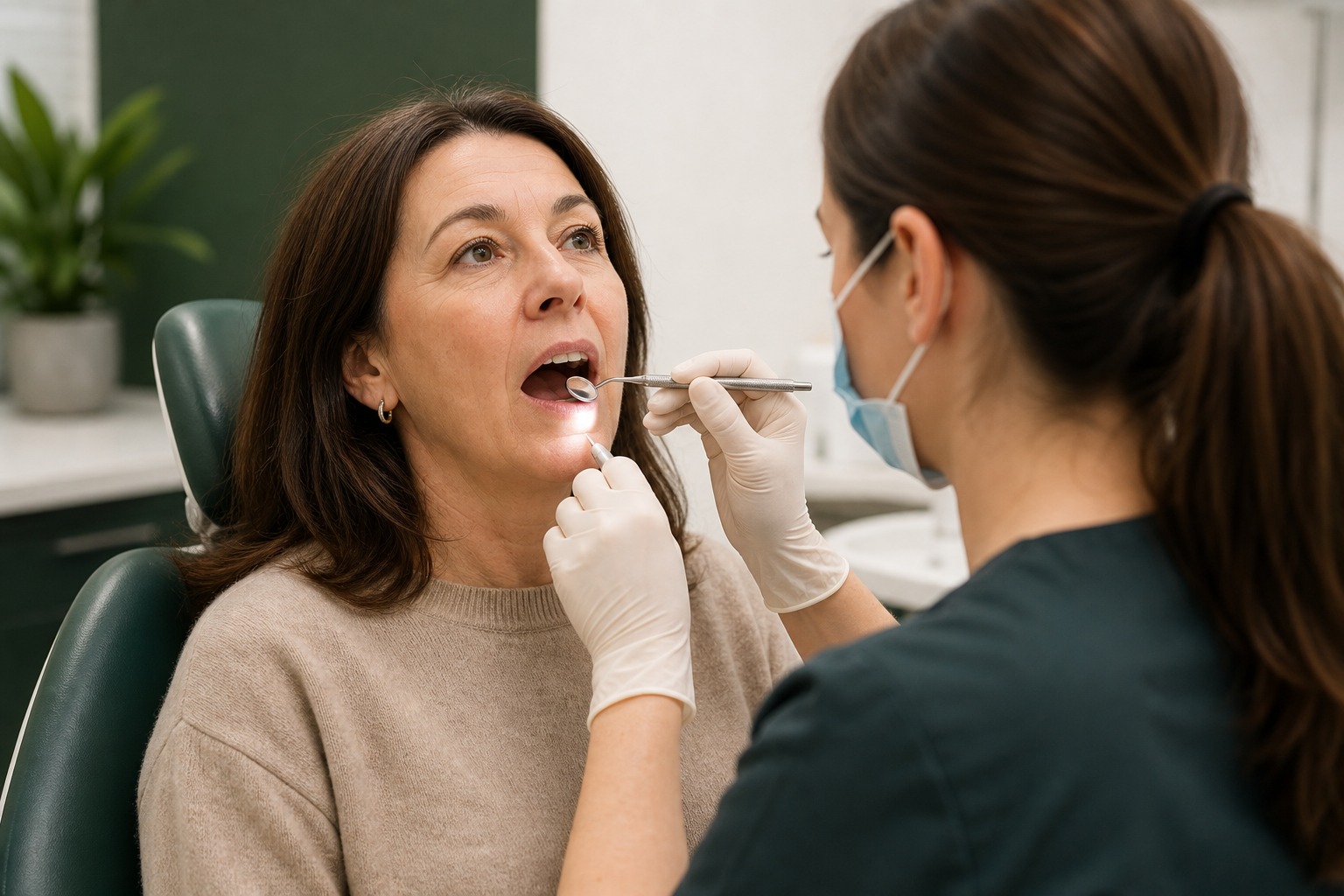
The dentist will ask when you first noticed the ulcer, whether it has changed, whether similar ulcers have occurred, and about medicines, tobacco and alcohol use, recent illness and general health. Bring a medicine list and mention any dental appliance that contacts the area.
The examination usually includes the ulcer and the rest of the mouth, not just the painful point. The dentist may gently feel the tissues and check the jaw and neck. They will look for trauma from a tooth or restoration, inflammation, infection and other colour or texture changes. X-rays do not show every soft-tissue problem and are only considered when there is a relevant dental reason.
If a local cause is found, treatment might involve smoothing a sharp edge or adjusting a denture. Persistent, unexplained or suspicious changes may need an urgent referral to an oral medicine or hospital team. The referral pathway is designed to investigate efficiently; most people referred do not receive a cancer diagnosis.
Call 999 for severe swelling or a rapidly developing reaction that affects breathing. Seek urgent medical or dental advice if you cannot swallow fluids, are significantly unwell, or swelling is spreading into the face or neck. An ordinary isolated ulcer usually does not cause these symptoms.
Repeated ulcers can be associated with mechanical trauma, family tendency, stress, hormonal changes, medicine effects or deficiencies. They may also occur alongside gastrointestinal, immune or blood conditions. That range is why indiscriminate supplements or restrictive diets are not a reliable first response.
A dentist can identify oral triggers and may suggest that your GP investigates a wider pattern. Keep a brief diary of timing, location, food changes, medicines and other symptoms. It is more useful than trying several treatments at once, because it preserves a pattern for clinical review.
If a denture creates a recurrent sore area, arrange a fit assessment. Continued rubbing is not something to tolerate as part of wearing dentures. If a brace component is sharp, contact the orthodontic team for advice rather than making a permanent adjustment yourself.
The majority of mouth ulcers are not cancer. However, a non-healing ulcer is one recognised symptom that clinicians take seriously. Regular examinations also give the dentist an opportunity to inspect areas that are difficult to see yourself.
Mouth cancer screening in Kingston forms part of an appropriate oral examination; it is not a laboratory test that guarantees future health. Tell the dentist about any change even if it does not hurt. Early assessment is preferable to waiting for pain.
You can reduce important risks by not smoking and by staying within UK low-risk alcohol guidance. Those steps do not remove the need to check a persistent change, and people without recognised risk factors should still seek assessment when symptoms meet the thresholds above.
Many settle within one or two weeks. Arrange a dentist or GP review if it remains after three weeks.
A dentist can assess it, remove a dental source of trauma and decide whether treatment, monitoring or referral is appropriate.
Yes, if it lasts longer than three weeks or has another concerning feature. Pain is not the only reason to investigate a change.
Common mouth ulcers are not contagious. They are different from cold sores, which are caused by a virus.
Either can start an assessment. A dentist is particularly well placed to check local dental causes and the rest of the mouth; wider symptoms may also need your GP.
Thames Street Dental can examine a persistent or recurrent mouth change and explain whether local care, review or referral is appropriate.








 020 8546 6546
