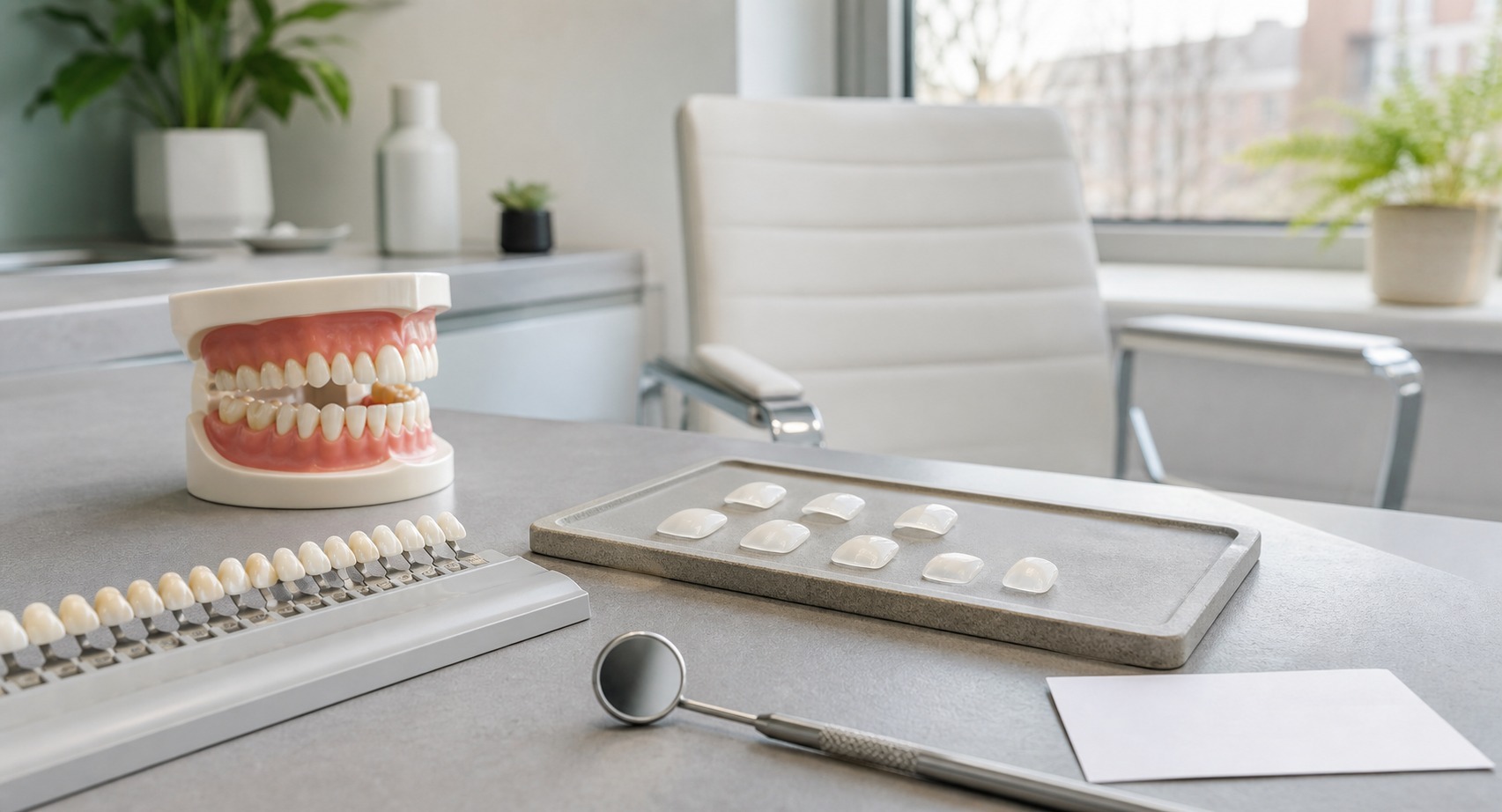
Contact lens veneers in Kingston generally refers to ultra-thin porcelain veneers, sometimes described as contact-lens-thin shells bonded to the front of teeth. They can improve colour, shape, small chips or minor gaps where suitable, but they are not a one-size-fits-all treatment. A dentist needs to assess enamel, bite and gum health before recommending minimal-prep or no-prep veneers.
This guide explains what the phrase means, who may suit ultra-thin veneers, what to check before treatment and how Thames Street Dental can help you compare safe cosmetic options.
Contact lens veneers are not contact lenses for teeth. The phrase is a patient-friendly way to describe very thin veneers, usually made from porcelain or another ceramic, that cover the visible front surface of a tooth. They are often discussed as a more conservative form of veneer treatment because the ceramic can be very slim.
The NHS describes veneers as new facings for teeth that can disguise a discoloured or chipped tooth, with a thin layer of porcelain or natural-coloured material fitted over the front of the tooth. It also notes that some veneers need a little drilling of the front surface, while not all veneers need this.
The British Society of Prosthodontics explains that veneers are thin pieces of ceramic or resin bonded to the tooth surface and that modern techniques may sometimes allow veneers to be made that bond directly to the tooth surface. The key word is sometimes. Tooth shape, colour, crowding, bite and gum position all affect whether a minimal-prep approach is realistic.
Patients often ask about contact lens veneers because they want a visible smile improvement without unnecessary removal of healthy tooth tissue. Where suitable, ultra-thin veneers may be discussed for cosmetic concerns such as:
Veneers are not the right answer for every cosmetic concern. If the teeth are crowded, dark, heavily restored, decayed, mobile, worn by grinding, or affected by gum disease, another plan may be safer. Sometimes the first step is hygiene care, whitening, orthodontics, replacement fillings or simply stabilising oral health before cosmetic treatment.
If you are looking for broader dental veneers in Kingston, the veneers service page is the main treatment page to read next.
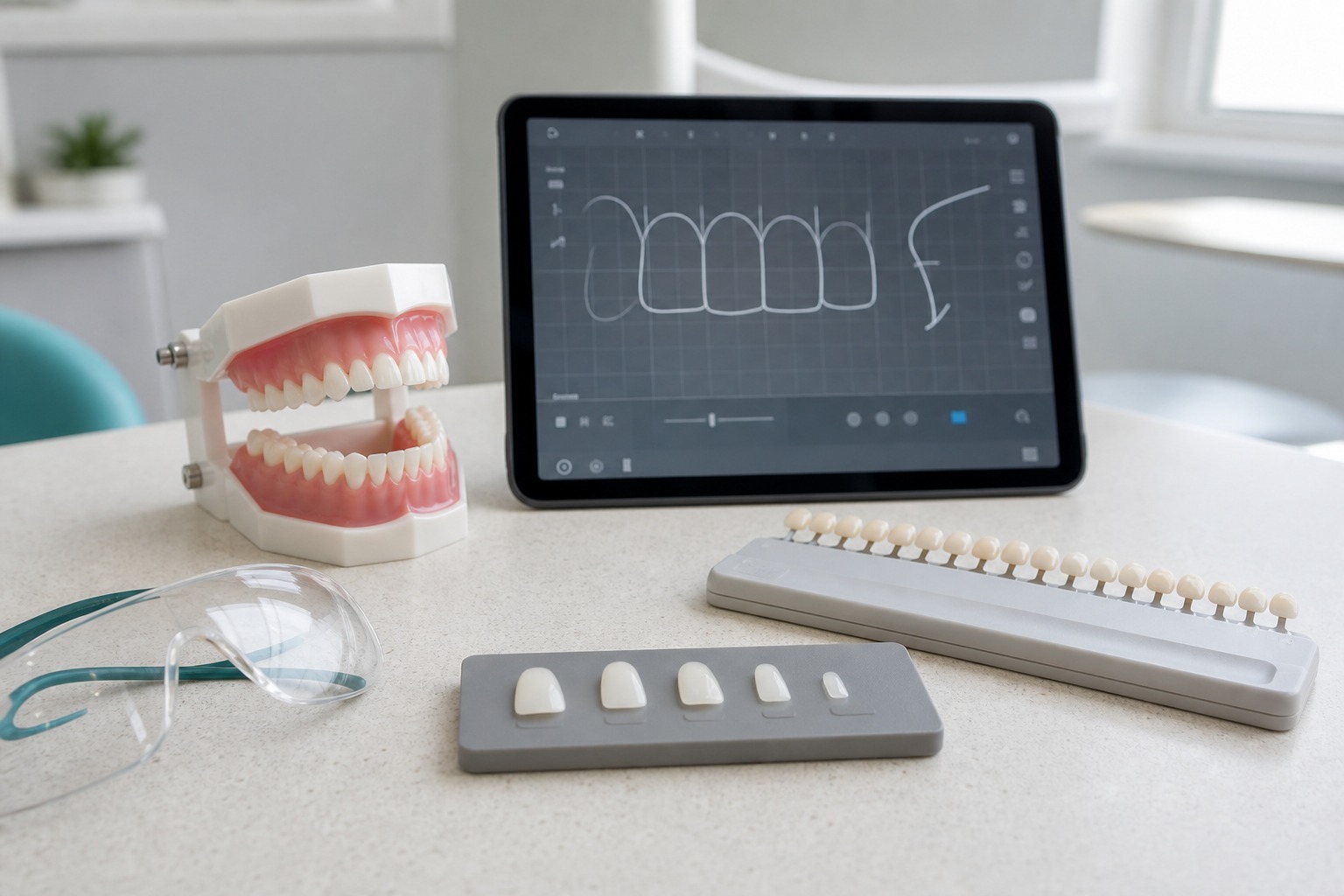
Minimal-prep veneers can sound simple, but a conservative plan still needs careful diagnosis. If a tooth already sits forward, adding ceramic to the front may make it look bulky unless some preparation or orthodontic movement is considered. If a tooth is very dark, an ultra-thin veneer may not mask the shade enough without changing the design.
Your dentist also needs to check whether the gum margins are healthy, whether the bite places heavy force on the planned veneer, and whether any decay or cracks are present. MouthHealthy, the American Dental Association’s patient site, advises that dental issues such as decay or gum disease should be treated before veneers are placed.
At a consultation, Thames Street Dental can help you understand whether ultra-thin veneers are a sensible option or whether another route would protect more tooth structure. The assessment may include:
If you are comparing several cosmetic routes, a cosmetic dentist in Kingston can talk through the trade-offs rather than starting with a single treatment in mind.
The right choice depends on the problem you want to solve. A veneer changes the visible front surface of a tooth; whitening changes natural tooth colour; bonding adds tooth-coloured resin; orthodontics moves teeth. In many smile plans, the safest sequence matters as much as the treatment chosen.
| Option | May help with | Points to discuss |
|---|---|---|
| Contact lens or ultra-thin veneers | Minor shape, colour, chip or gap concerns where the tooth position allows a conservative design. | Suitability, enamel, bite, tooth colour, reversibility and maintenance. |
| Teeth whitening in Kingston | Natural teeth that are darker than you would like, where whitening is suitable. | Whitening does not change the colour of veneers, crowns, fillings or implants. |
| Composite bonding in Kingston | Small chips, edges, minor gaps or shape changes using tooth-coloured resin. | Bonding can be repairable, but it may stain or wear differently from porcelain. |
| Orthodontic treatment | Crowding, spacing, rotations or bite concerns where tooth movement is the main issue. | May reduce the need for restorative treatment, but usually takes longer. |
A consultation is designed to slow the decision down enough to make it safer. For contact lens veneers or any veneer treatment, useful steps include:
If treatment is suitable, records such as photographs, scans or impressions may be needed. For any laboratory-made veneer, the fit, shade and bite should be checked before bonding.
Veneer costs depend on the number of teeth, material, planning, laboratory work and any treatment needed first. Use the treatment fee guide as a starting point, then ask for a written estimate based on your assessment.
No veneer lasts forever. MouthHealthy notes that veneers can chip, crack, wear down or loosen over time, and people who clench or grind their teeth may not be ideal candidates without extra planning. The British Society of Prosthodontics also notes that how long fixed restorations last depends on planning, execution and maintenance.
After treatment, you still need to brush with fluoride toothpaste, clean between your teeth, avoid using teeth as tools, attend check-ups, and keep up with a dental hygiene appointment where recommended. Veneers cover the front of teeth; they do not make the tooth immune to decay or gum problems.
These guides may help if you are comparing cosmetic options before choosing veneers.
A closer look at ultra-thin veneers and the kinds of concerns they may be discussed for.
Useful if your main concern is colour, chips or treatment order before a smile change.
Helpful if tooth shade is the main reason you are considering veneers.
Contact lens veneers usually refers to very thin porcelain or ceramic veneers. They are still veneers, but the phrase highlights how slim they may be in selected cases.
Some ultra-thin veneers may need little or no enamel preparation, but this is not suitable for everyone. Tooth position, colour, bite and desired shape all affect whether preparation is needed.
They may help with small gaps, minor chips or uneven edges where the teeth and bite are suitable. Larger gaps, crowding, decay or heavy wear may need a different plan.
Neither option is automatically better. Veneers and bonding use different materials and have different preparation, maintenance, repair and cost considerations. A dentist can compare them after assessment.
Veneer lifespan varies. It depends on the material, planning, bite, oral hygiene, grinding habits and ongoing dental care. They may need repair or replacement over time.
Whitening changes natural tooth shade, not porcelain or composite restorations. If colour is part of your goal, ask about whitening before veneers are made.
Thames Street Dental can assess whether ultra-thin veneers, traditional veneers, bonding, whitening or another option is the sensible next step for your smile.








 020 8546 6546
